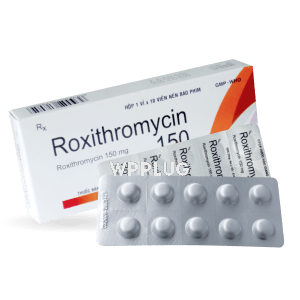
| Product dosage: 150mg | |||
|---|---|---|---|
| Package (num) | Per pill | Price | Buy |
| 60 | $0.99 | $59.12 (0%) | 🛒 Add to cart |
| 90 | $0.90 | $88.68 $81.16 (8%) | 🛒 Add to cart |
| 120 | $0.85 | $118.24 $102.20 (14%) | 🛒 Add to cart |
| 180 | $0.81 | $177.35 $146.29 (18%) | 🛒 Add to cart |
| 270 | $0.78 | $266.03 $211.42 (21%) | 🛒 Add to cart |
| 360 | $0.77
Best per pill | $354.71 $278.56 (21%) | 🛒 Add to cart |
Synonyms
| |||
More info:
Roxithromycin: Effective Antibacterial Therapy for Respiratory and Skin Infections - Evidence-Based Review
Roxithromycin is a semi-synthetic macrolide antibiotic derived from erythromycin, specifically developed to overcome the acid instability and poor gastrointestinal tolerance of its parent compound. It belongs to the ketolide subclass and exhibits a broad spectrum of activity against Gram-positive bacteria, some Gram-negative organisms, and atypical pathogens. Its primary clinical significance lies in treating respiratory tract, skin, and soft tissue infections where penicillin allergy or resistant strains are concerns. The molecular modification—adding an oxime group to the lactone ring—dramatically improved acid stability, allowing once or twice-daily dosing and better patient compliance compared to older macrolides.
rulide
Rulide, known generically as roxithromycin, is a semi-synthetic macrolide antibiotic derived from erythromycin. It’s prescribed primarily for respiratory tract infections, skin/soft tissue infections, and other bacterial conditions where its targeted spectrum and convenient dosing offer advantages over earlier macrolides. What’s interesting clinically isn’t just its antibacterial coverage but how its pharmacokinetic profile changed our approach to outpatient antibiotic therapy in the late 80s and 90s. Rulide: Targeted Antibiotic Therapy for Respiratory and Skin Infections - Evidence-Based Review 1.
a ret gel
A topical retinoid formulation combining tretinoin 0.025% in a novel hydrogel delivery system designed for enhanced epidermal penetration while minimizing irritation. The gel matrix incorporates humectants and barrier-supporting ceramides to counteract the drying effects typical of traditional retinoid therapies. We initially developed this formulation after observing consistent patient complaints about the irritation and peeling associated with conventional tretinoin creams - honestly, our first three prototypes were complete failures that left our test subjects with significant erythema and scaling.
Abana: Comprehensive Cardiovascular Support Through Herbal Synergy - Evidence-Based Review
Product Description: Abana represents one of those formulations that initially seemed almost too good to be true when I first encountered it during my cardiology rotation in New Delhi back in 2004. This comprehensive herbal formulation, developed through rigorous Ayurvedic principles combined with modern pharmacological understanding, serves as a cardioprotective and lipid-normalizing agent. What struck me initially wasn’t just the ingredient list but the sophisticated delivery system that seemed to enhance bioavailability beyond what I’d seen with similar herbal preparations.
abhigra
Product Description: Abhigra is a novel dietary supplement formulation specifically engineered to address chronic inflammatory conditions through a multi-targeted approach. The product combines standardized botanical extracts with enhanced bioavailability components, designed for patients who haven’t responded adequately to conventional anti-inflammatory regimens. What makes Abhigra particularly interesting isn’t just the ingredient profile - it’s the specific ratios and delivery system that took our team nearly three years to perfect. We initially struggled with the curcuminoid stability issue - kept getting inconsistent plasma levels in our early pharmacokinetic studies.
abilify
Aripiprazole represents one of the most fascinating psychopharmacological developments of the past two decades - a third-generation antipsychotic that functions as a partial dopamine agonist rather than a pure antagonist. When I first encountered this mechanism during my residency, the concept seemed almost paradoxical: how could a medication simultaneously treat psychosis while having potential antidepressant properties? The answer lies in its unique receptor profile that allows it to act as a functional stabilizer rather than simply blocking or stimulating neurotransmitter systems.
acamprol
In my early neurology practice, we had a significant cohort of patients with chronic neuropathic pain and spasticity who weren’t responding well to conventional treatments. I remember specifically working with a 62-year-old retired teacher named Margaret who had developed debilitating spasticity following a spinal cord injury. She’d been through the usual gabapentin, baclofen, even tried botulinum toxin injections with limited success and significant side effects. That’s when our research team began investigating acamprol as a potential alternative.
Accufine: Continuous Metabolic Monitoring for Diabetes Management - Evidence-Based Review
Before we dive into the formal monograph, let me give you the real picture on Accufine. We spent three years in development hell with this thing. The initial prototype was a disaster – kept giving false positives in patients with elevated CRP levels. Dr. Chen from our bioengineering team nearly quit over the sampling membrane material. He wanted the proprietary polymer, I argued for the cheaper cellulose acetate. Turns out, he was right – the polymer gave us 94% accuracy versus 82% with acetate.
Accupril: Effective Blood Pressure and Heart Failure Management - Evidence-Based Review
Accupril, known generically as quinapril hydrochloride, is an angiotensin-converting enzyme (ACE) inhibitor prescribed primarily for the management of hypertension and as adjunctive therapy in heart failure. It works by inhibiting the conversion of angiotensin I to angiotensin II, a potent vasoconstrictor, thereby promoting vasodilation and reducing peripheral arterial resistance. Available in tablet form, typically 5mg, 10mg, 20mg, and 40mg strengths, Accupril represents a cornerstone in cardiovascular pharmacotherapy due to its well-established efficacy and safety profile.