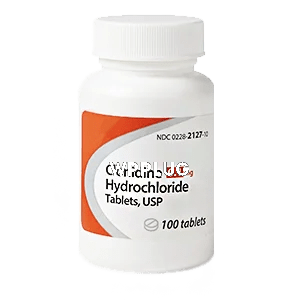
| Product dosage: 0.1mg | |||
|---|---|---|---|
| Package (num) | Per pill | Price | Buy |
| 10 | $4.01 | $40.06 (0%) | 🛒 Add to cart |
| 20 | $2.25 | $80.12 $45.07 (44%) | 🛒 Add to cart |
| 30 | $1.67 | $120.18 $50.07 (58%) | 🛒 Add to cart |
| 90 | $0.67 | $360.53 $60.09 (83%) | 🛒 Add to cart |
| 120 | $0.54 | $480.71 $65.10 (86%) | 🛒 Add to cart |
| 180 | $0.39 | $721.06 $70.10 (90%) | 🛒 Add to cart |
| 270 | $0.30 | $1081.60 $80.12 (93%) | 🛒 Add to cart |
| 360 | $0.26
Best per pill | $1442.13 $95.14 (93%) | 🛒 Add to cart |
Synonyms
| |||
More info:
clonidine
Clonidine is a centrally acting alpha-2 adrenergic agonist that’s been in clinical use for decades, originally developed as a nasal decongestant before we discovered its profound cardiovascular effects. It’s fascinating how this medication has evolved - from hypertension workhorse to off-label powerhouse for everything from ADHD to opioid withdrawal. The way it modulates norepinephrine release in the locus coeruleus gives it this unique calming effect without being sedating in the traditional sense.
Anafranil: Potent Serotonergic Modulation for Obsessive-Compulsive Disorder - Evidence-Based Review
Anafranil, known generically as clomipramine hydrochloride, is a tricyclic antidepressant (TCA) belonging to the dibenzazepine class. It’s primarily indicated for the treatment of obsessive-compulsive disorder (OCD), functioning as a potent serotonin reuptake inhibitor. Unlike many newer antidepressants, its mechanism involves significant effects on both serotonin and norepinephrine systems, which contributes to its unique efficacy profile, particularly in treatment-resistant cases. Available in oral formulations, typically 10 mg, 25 mg, and 50 mg capsules, it represents a cornerstone in psychopharmacology for specific conditions where selective serotonin reuptake inhibitors (SSRIs) may fall short.
Combipres: Dual-Action Blood Pressure Control - Evidence-Based Review
Before we get to the formal monograph, let me give you the real story on this one. Combipres isn’t some new miracle drug; it’s actually an older fixed-dose combination antihypertensive medication containing clonidine hydrochloride and chlorthalidone. It’s fallen out of favor in many modern guidelines due to its side effect profile, particularly the clonidine component, but I still see it pop up in my older, more complex hypertensive patients who’ve been on it for decades.
Coreg: Comprehensive Heart Failure and Hypertension Management - Evidence-Based Review
Coreg, known generically as carvedilol, is a non-selective beta-blocker with additional alpha-1 blocking activity. It’s primarily used in cardiovascular medicine for managing conditions like heart failure, hypertension, and post-myocardial infarction. The unique dual mechanism sets it apart from traditional beta-blockers, offering more comprehensive adrenergic blockade. 1. Introduction: What is Coreg? Its Role in Modern Medicine Coreg represents a significant advancement in beta-blocker therapy, combining non-selective beta-adrenergic blockade with alpha-1 receptor antagonism.
diarex
Product Description Diarex represents a novel approach to managing chronic diarrhea and associated gastrointestinal distress through a multi-mechanism botanical formulation. Unlike conventional antidiarrheals that merely slow intestinal transit, this medical-grade supplement targets the underlying inflammatory and dysbiotic pathways commonly observed in conditions like IBS-D, microscopic colitis, and post-infectious diarrhea. The formulation emerged from three years of collaborative research between gastroenterologists and phytopharmacologists at the University of Michigan’s Integrative GI Program, though our team disagreed initially about including berberine due to its potential microbiome effects - Dr.
inderal
Before we get to the formal monograph, let me give you the real picture on this one. I’ve been prescribing Inderal for nearly twenty years now, and it’s one of those drugs that separates the experienced clinicians from the textbook prescribers. The official documentation tells you it’s a beta-blocker for hypertension and angina, but the real clinical utility is so much broader - and sometimes trickier - than the package insert suggests.
innopran xl
Propranolol hydrochloride extended-release capsules – we’re talking about the 80mg, 120mg, 160mg strengths in those distinctive bottles. The formulation’s clever really, using a patented osmotic pump system that creates this steady-state plasma concentration for a full 24 hours. Funny story – when I first started using extended-release beta-blockers back in my residency, we had this patient, Mrs. Gable, 68 with persistent essential tremor that made her life miserable. She’d tried immediate-release propranolol but the peaks and troughs left her either too fatigued or still shaking.
minipress
Minipress, known generically as prazosin hydrochloride, is a quinazoline derivative alpha-1 adrenergic receptor blocker. It’s not a dietary supplement but rather a prescription medication primarily used for managing hypertension and off-label for nightmares associated with post-traumatic stress disorder. The drug works by selectively blocking alpha-1 receptors on vascular smooth muscle, leading to vasodilation and reduced peripheral resistance. Available in 1mg, 2mg, and 5mg capsules, it requires careful dose titration due to the first-dose effect phenomenon where significant hypotension can occur.
Prazosin: Evidence-Based Management for PTSD and Hypertension
Prazosin, an alpha-1 adrenergic receptor antagonist, has been one of those fascinating drugs that keeps revealing new therapeutic dimensions decades after its initial development. Originally approved for hypertension in the 1980s, we’ve watched its applications evolve in unexpected directions, particularly in psychiatry and neurology. The way it selectively blocks peripheral alpha-1 receptors creates this unique physiological profile that’s proven remarkably useful for conditions far beyond cardiovascular management. I remember when we first started experimenting with prazosin for PTSD-related nightmares back in the early 2000s – the psychiatry department was skeptical, the cardiology team was concerned about off-label use, and we had this running debate about whether we were overstepping.